November Councillor Report 
// Forest Gate North Ward Projects //
Thorogood Garden Project
Winter works Programme is basically a funding pot available to provide more or improve green spaces in Newham for residents. The decision on where to do this is decided at a Community Neighbourhood level. In my June Councillor report I mentioned that I organised a walkabout with officers from Greenspace and local residents to choose suitable locations for a Winter Works project in FGN. We have decided on Thorogood Gardens and Warner Close.
I decided to work with officers to pull in different different funding pots available for bigger regeneration project. We are now looking to create community garden with space for edible planting, improving the building, redoing the pavements and putting in new lighting. I’ve organised a special Councillor surgery on 18th November to meet with and consult local residents about our ideas- watch this space!
Community Arts project
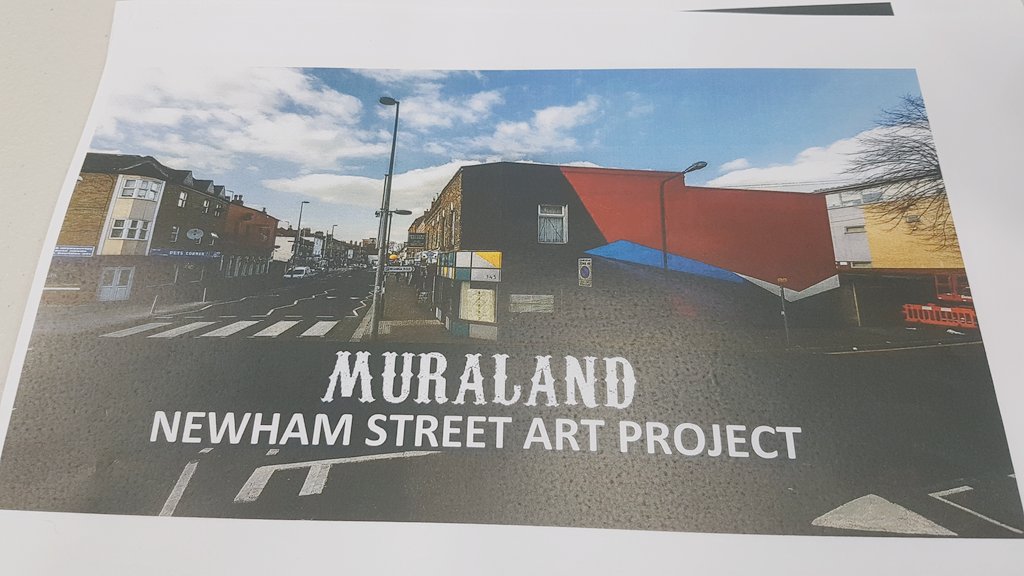
As soon as Newham hired an officer to lead on the community arts around the Crossrail stations back in April I’ve been pestering the poor officer ever since. But it’s all been worth it! We’ve made great progress and have decided on 5 mural pieces across the ward.
We’ll be starting with #Muraland by Maryland Station which should happen this side of Christmas. Design and art in other locations will follow a thorough community consultation process and will be leading by a community steering group which I am helping to set up.
MarylandZone2 Campaign Update
For the last 9 months I’ve been working with Friends of Maryland on the #MarylandZone2 Campaign. We have over 500 signatures and 100s of positive and supportive comments.
Maryland was the only station in the Stratford area not to be re-zoned to 2/3 in January, meaning residents, many of whom are on low incomes, have paid over £200 more this year to use their local station compared to those living elsewhere in the area.I lobbyed newly-elected Assembly Member Unmesh Desai to write Sadiq Khan a question who has responded. Friends of Maryland will discuss this first at the branch meeting on Thursday.
Supporting Businesses
Met with local businesses in August and September and encouraged them to attend the Business Forum networking meeting.
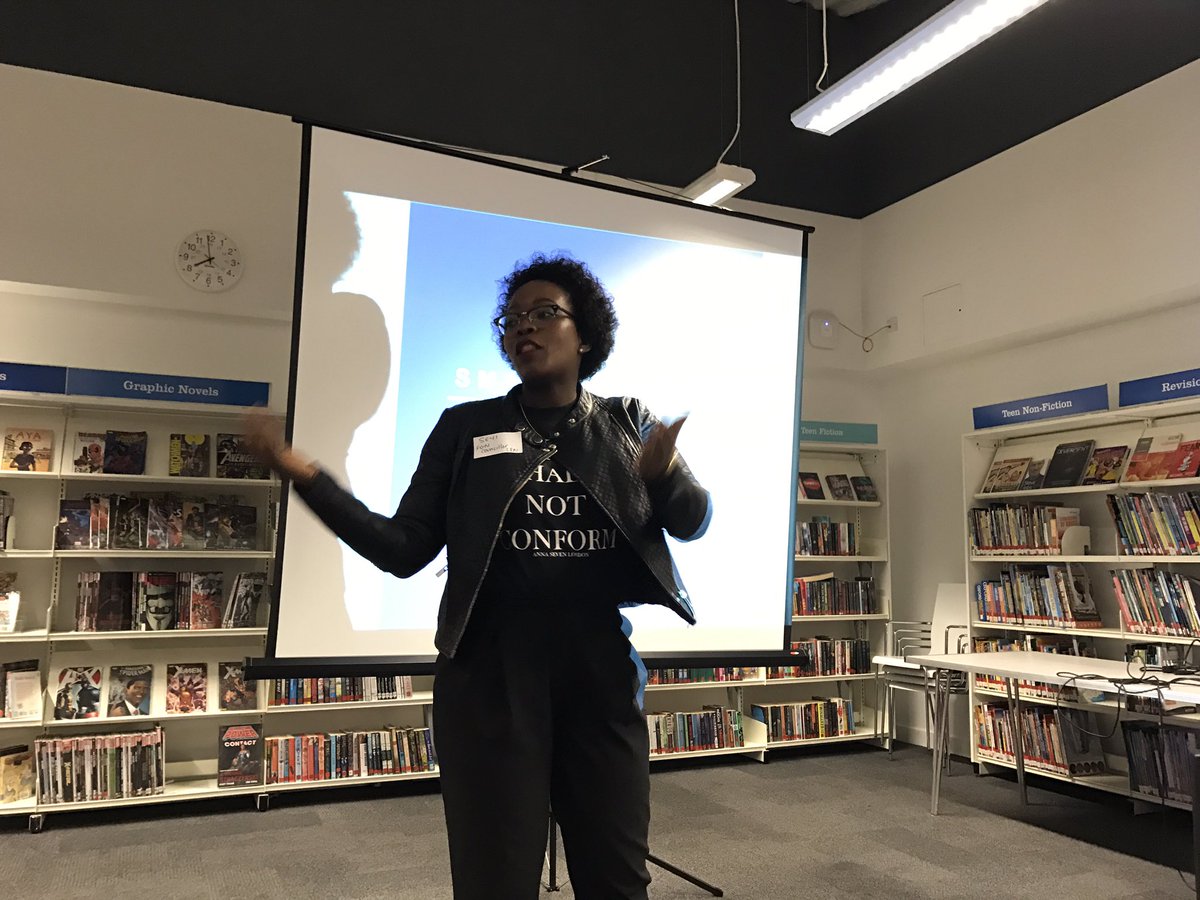
@Rectripp Tweet pic “@SeyiAkiwowo is doing her thing, wrapping up the presentations #forestgate #smallbizsat”
Stratford Original also know was the Business Improvement District’s programme is up for renewal next year. I’m working with them to see if it will be feasible to extend this to Maryland.
I agreed to support Number 8 and the Fish Mongers a traders association in Forest Gate and Maryland as Forest Gate business don’t think they are quite ready to be a Business Improvement District.
For the third year in a row I have been supporting Small Business Saturday in Forest Gateand Maryland. Last year it involved introducing Lyn Brown MP to our great local businesses and market stallholders. This year Newham Council have decided to adopt the SBS initiative and I’ll be working with the FG team on the Forest Gate Community Neighbourhood SBS initiative. The aim this year is to encourage more people to shop locally.
I’m currently lobbying for extra free parking on Small Business Saturday (3rd December) to encourage more trade for businesses.
Working on #MerrylandE15, the Christmas lights switch on in Maryland on Friday 9th Dec, 5:30pm- 6:30pm. I REALLY hoped Idris Elba would switch on the lights but his agent said he is unavailable. There will be a local choir and Christmassy snacks and drinks.
Forest Gate Christmas lights switch is on 3rd December 5:30pm.
Housing
East Thames Group wrote to all Newham Councillors last month to inform us some residents tenures were changing (rent to buy no longer exists and the period in which they agreed to save and buy has is now over). This will affect a few residents across Newham and in Forest Gate. I’ve written to the CEO of East Thames for clarification on which residents in the ward their policy change will affect and their comms and support plan.
Regeneration
With two Crossrail stations coming to Forest Gate North I have been heavily involved in the regeneration plans with officers. I was really concerned that the regeneration funding pot would only stretch to quarter of Leytonstone High Road. Not only would this look really really weird but that left out section of road towards the borough boundary is in desperate need of a face lift!
During a walkabout last year I asked officer was can be done about that they put in a bid for a Local Improvement Plan bid to Transport for London. This will allow us to extend the regeneration plans along Leytonstone High Rd and I’m super pleased to say this was approved at Cabinet this month!
I’m dealing with lots of casework at the moment particularly managing the Parking hiccups managing the and the resourcing issue. Take a look at my joint blog post with Cllr Rachel Tripp here and here.
Forest Gate North Ward Events Attended
17th September Woodgrange Market Food Festival
18th September Play Street Chestnut Avenue
28th September- Faithful Friends meeting
29th September- Business Networking meeting
Scrutiny Commissions- Deputy Chair of Youth and Gangs Scrutiny Commission & member of Overview & Scrutiny Commission.
As you know I am really concerned about the spike in group offending and violent crime in Newham. As an appointed member of Overview and Scrutiny I proposed we hold a scrutiny commission on Youth and Gang Crime. I was appointed Deputy Chair of Youth and Gangs Scrutiny Commission and a report should be out in the next few months.
Additional Committee and Newham Council Commitments
Investment and Accounts
I was sadly removed from Investment and Accounts due to political reasons outside my control. I am deeply hurt and frustrated by this, particularly the way I found out and I have formally raised this with the Whip who has tried to support me. (Thank you to Rachel for consoling me on this x) I dedicated a lot of time over the last 18 months learning about pensions, having mentoring session, attending training and meetings in order to be a competent member of the committee. Nevertheless, I hope the committee are able make even more savings this year.
Syrian Refugees 😦
The refugee crisis only remains a crisis if we all don’t do our bit to help those in serious need. Newham are currently resettling and integrating Syrian families into Newham
I am working with Hillsong Church London to become a Community Sponsorship Trust . This will enable them to take on the role of supporting resettled refugees in the UK and they would like to start in Newham. If things go to plan we should be able to resettle 1-2 Syrian refugee family/lies by early February. We are in desperate need of volunteers for a whole range of things, from teaching, interpretation, career support and donating food etc. Please let me know if you can help: seyi.akiwowo@newham.gov.uk or visit www.hillsong.co.uk/sponsorship
Newham and Brexit 😦
Following report on Newham and EU Referendum presented and approved by Cabinet on Thursday 26th May (you can read part one of the report here). I am now leading on the Newham Brexit aftermath work. This involves looking at our policy response to the EU Referendum as well as preparing for the impact Brexit on the Council next year.
FG MAT Trustee
Forest Gate Community School has recently been converted to a Multi-Academy Trust. The Head teacher asked if I would be a Trustee.
Forest Gate North Ward, Crime and Anti-Social Behaviour
At Full council I asked three questions on the shooting in Forest Gate North since April. I am keen to understand how the police and the council are working to solve and prevent shootings (and other violent crimes) in Forest Gate and how we can communicate this to residents who are rightly concerned. Forhad has offered to meet with me to discuss how we can communicate what the council is doing in Forest Gate.
Last week I also asked Lyn Brown MP about the shooting and she has invited me to a meeting with Newham Borough Commander to discuss this.
I have also organised a meeting with the designated detectives in gangs unit for an update.
Safer Neighbourhood ward panel
I attend the bi monthly Safer Neighbourhood ward panel meetings and I’m currently working with the police to expand the panel member to be more representative of the ward particularly the centre bit .
As you all know laughing gas canisters have been a big issue in the ward. At the last Safer Neighbourhood meeting the police agreed that Capel Road and Chestnut Avenue should be priority areas. I am super pleased to report the canister and ASB issue has significantly reduced. The FGN police team have done a fantastic job!
Wellington and Waterloo Roads are also a priority area and complaints received have reduced too.
There does seem to be a wider issue around Idle and uninspired young people, hence Anthony Goodman’s suggestion for this to be a local campaign for the ward. I am also looking to set up Friends of Wellington Rd community group with local active residents.
Fly-tipping- Sebert Road/ Woodgrange Road junction
We’ve received various complaints from residents, some impassioned discussion on Facebook groups, reporting on LoveNewham, taking more photos of the area than I care to remember, chatting with the ward enforcement officer, raising the area as a hotspot at a meeting with a senior enforcement officer so I suggested and organised a site visit on the junction of Sebert Road and Woodgrange Road. We had a meeting on Monday and we’re pleased to see that fly-tipping has significantly reduced.
You can read more about what we did here and here
Fly-tipping-Waste Timed collection now active on Leytonstone High Rd,
For the last 10 months I’ve been working with officers to look at the amount of litter, fly-tipping and recycling in the ward. One of the solutions to address the high volume of rubbish on Leytonstone High road was extending the Waste Timed Collection from Stratford to Maryland. There was a successful pilot that ended in January which saw a significant reduction in reported fly-tipping and litter. In order to have a permanent Waste Timed Collection the council needed to consult residents and business owners affected as well as have sign off from the Lead Cabinet member for Environment and Leisure. After much persuasion and we had a consultation and I’m pleased to report
Forest Gate North Branch Labour Party
Co-Held a vigil for the Late Jo Cox at Wanstead Flats.
Leafleting and held street stalls for EU Referendum, bitterly disappointed that we are leaving the EU. I haven’t moved through the stages of guilt yet (I’m still on the denial/anger stage).
Co-ran a stand up to racism demonstration at Forest Gate Station which made the front Newham Recorder.
Blowing up and giving balloons for Education not Segregation Street Stall outside Forest Gate Station.
Sent canvassing dates will be holding a session on 17th December 11:45, Nooks Cafe Leytonstone High Rd. Hope you’ll join me I’ll buy ya a christmasy hot drink afterwards. M
Working on a mid-term leaflet to be delivered in the new year, contains success stories of local Labour party Cllrs.
Thank you for reading!
If you have any question please feel free to contact me on: 02032874797 or via @SeyiAkiwowo or www.facebook.com/CllrSeyiAkiwowo. I’m holding Cllr surgeries on Sat 5th November, 26th November, 17th December